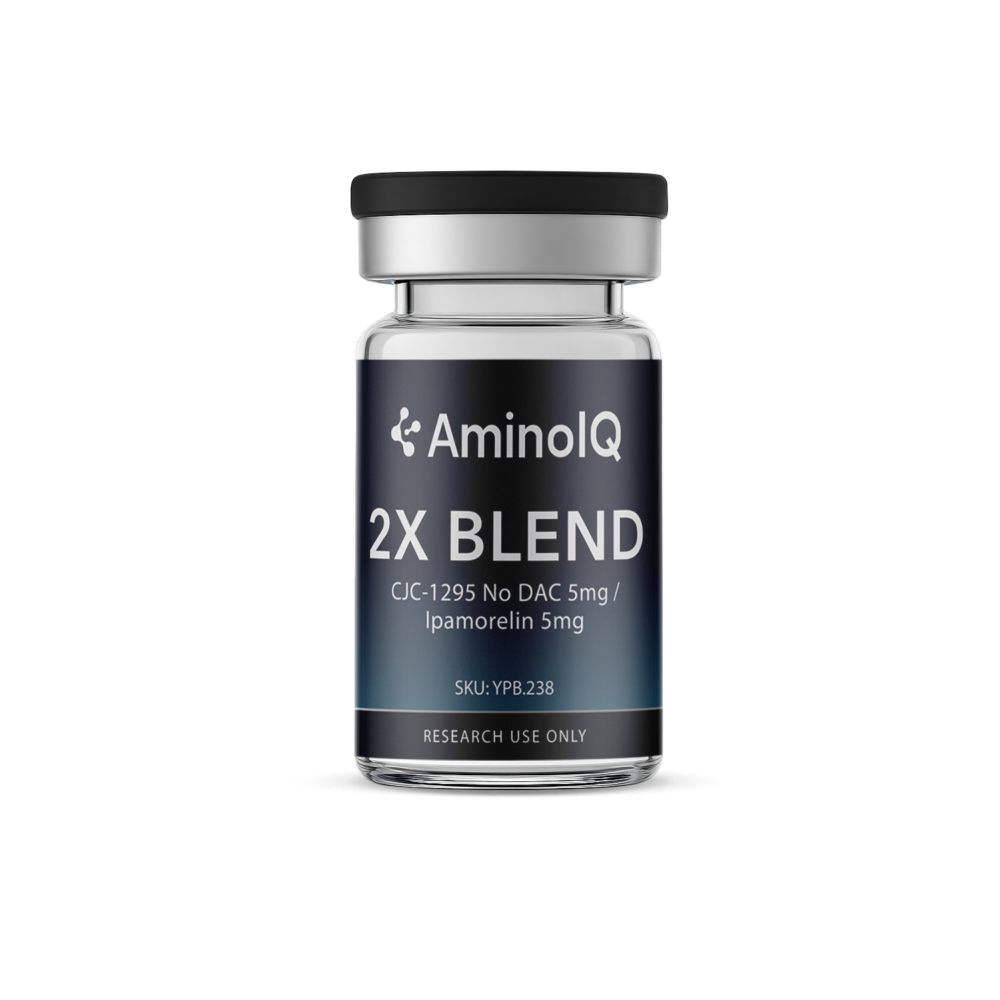
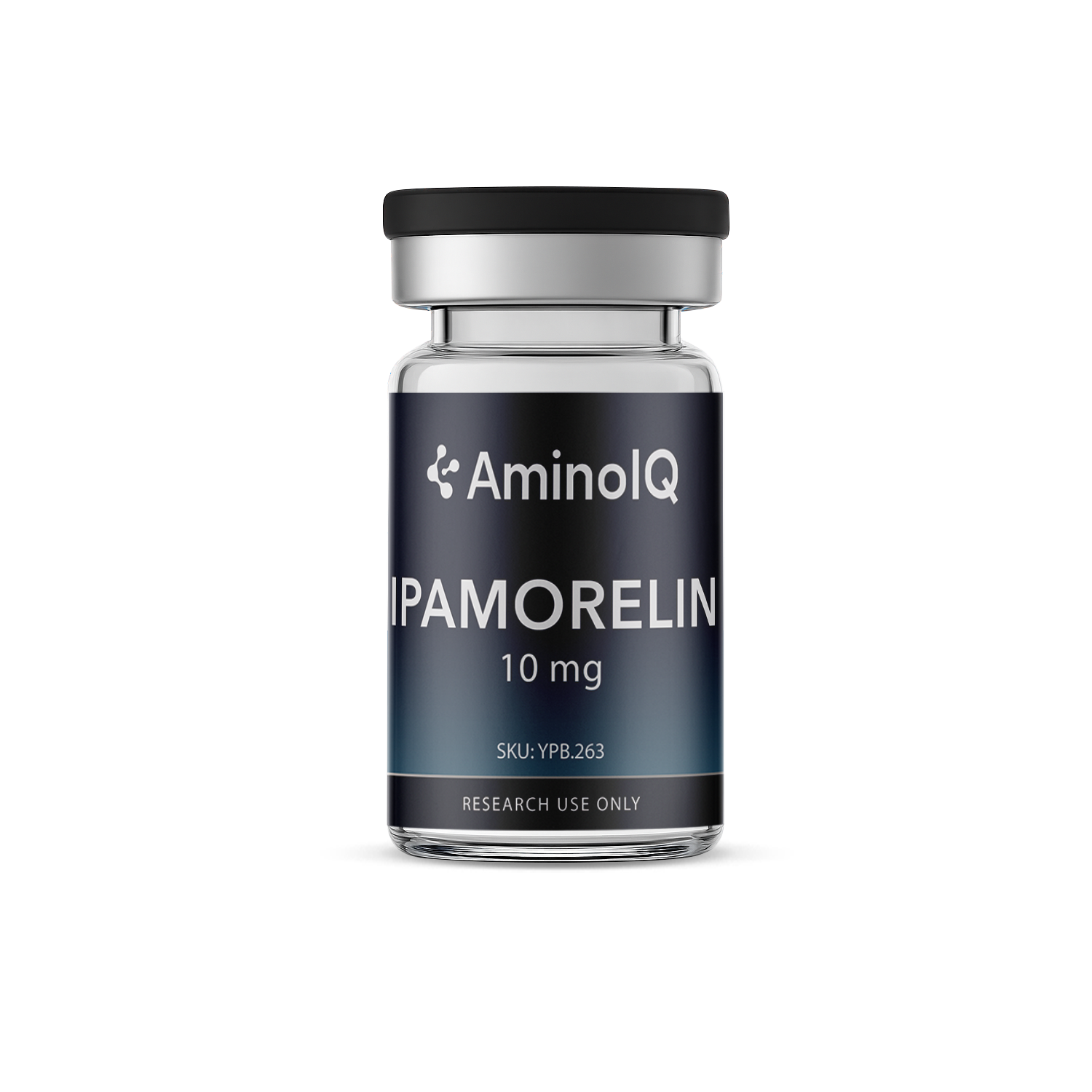
Ipamorelin (10mg)
$80.00
Description
A single-component research material supplied for controlled research environments. Suitable for studies exploring ghrelin (GHS-R1a) receptor–related pathways and assay development in model systems.
Composition
• Ipamorelin
• Appearance: Lyophilized powder in a sealed research vial
Research Focus (non-clinical)
• Peptide identity and purity assessment via HPLC/LC-MS
• Assay development and calibration for quantitative analysis of ghrelin-pathway models
• Chromatographic method optimization for impurity profiling and peak resolution
• Stability characterization of a lyophilized peptide under laboratory storage conditions
For qualified research professionals and institutional laboratories. Not for human use.
Documentation & Quality Assurance
Each lot is sourced through our verified global supply chain with emphasis on traceability and quality control. We work diligently to obtain and maintain third-party analytical reports (HPLC/LC-MS) and Certificates of Analysis for each batch, as part of our ongoing quality process. These documents are reviewed internally and displayed as they become available. Independent third-party testing is also performed on select lots to confirm identity, purity, and alignment with our internal specifications.
Important Notice
This product is intended for laboratory research use only. It is not intended for human or veterinary use, and must not be used for diagnostic, therapeutic, or clinical purposes.
This material is not a drug, medical device, or dietary supplement, and has not been evaluated by the U.S. Food and Drug Administration.
Quality & Manufacturing
All materials are sourced from carefully vetted domestic and international manufacturing partners who follow quality systems consistent with ISO and cGMP principles. Each supplier is reviewed for reliability, documentation integrity, and transparency in testing.
We require a verified purity of 99% or higher and perform independent third-party spot testing to confirm that select lots meet our internal standards for identity, purity, and composition. Where available, endotoxin testing results are included on Certificates of Analysis to verify laboratory purity; their inclusion is for research quality assessment only and does not imply suitability for human or veterinary use.
All research materials are sealed for integrity and packaged for stability during storage and transport from manufacturing through final delivery.
Additional information
| Weight | 0.5 lbs |
|---|
Storage Instructions
All our research peptides are manufactured using a lyophilization (freeze-drying) process. This method is designed to maintain product integrity and allows vials to remain stable during shipping for approximately 3–4 months.
Once a vial is reconstituted with bacteriostatic water, it should be stored in the refrigerator to help maintain stability. Under these conditions, reconstituted material is generally considered stable for up to 30 days.
Lyophilization is a dehydration technique in which compounds are frozen and then exposed to low pressure. This causes the water in the vial to sublimate directly from solid to gas, leaving behind a stable, crystalline white structure. This powder can be kept at room temperature until reconstitution.
Upon receipt, products should be stored away from heat and light. For short-term use, refrigeration at approximately 4°C (39°F) is suitable. For long-term storage (several months to years), vials may be placed in a freezer at approximately -80°C (-112°F). Freezing is the preferred method for preserving product stability over extended periods.
⚠️ Important Notice: These products are intended for research use only. Not for human consumption.
Certificate of Analysis

Research Use Only
These studies reference research-grade peptides for laboratory and scientific investigation only. Not for human consumption. Not intended to diagnose, treat, cure, or prevent any disease.
Published Scientific Research
Peer-reviewed laboratory research investigating growth hormone peptides from leading scientific databases
Analysis of new growth promoting black market products.
Detecting agents allegedly or evidently promoting growth such as human growth hormone (GH) or growth hormone releasing peptides (GHRP) in doping controls has represented a pressing issue for sports drug testing laboratories. While GH is a recombinant protein with a molecular weight of 22 kDa, the GHRPs are short (3-6 amino acids long) peptides with GH releasing properties. The endogenously produced GH (22 kDa isoform) consists of 191 amino acids and has a monoisotopic molecular mass of 22,12
View Full StudyPeptidomimetic growth hormone secretagogue derivatives for positron emission tomography imaging of the ghrelin receptor.
The ghrelin receptor is a seven-transmembrane (7-TM) receptor known to have an increased level of expression in human carcinoma and heart failure. Recent work has focused on the synthesis of positron emission tomography (PET) probes designed to target and image this receptor for disease diagnosis and staging.
View Full StudyDoping control container for urine stabilization: a pilot study.
The mixture consists of antimicrobial substances and protease inhibitors for the simultaneous inactivation of a wide range of proteolytic enzymes. The spray-coated chemical stabilization mixture was tested against microorganism elimination and steroid glucuronide degradation, as well as enzymatic breakdown of proteins, such as intact hCG, recombinant erythropoietin and small peptides (GHRPs, ipamorelin), induced by proteolytic enzymes.
View Full StudySimplifying and expanding the screening for peptides <2 kDa by direct urine injection, liquid chromatography, and ion mobility mass spectrometry.
The analysis of low-molecular-mass peptides in doping controls has become a mandatory aspect in sports drug testing and, thus, the number of samples that has to be tested for these analytes has been steadily increasing. Several peptides <2 kDa with performance-enhancing properties are covered by the list of prohibited substances of the World Anti-Doping Agency including Desmopressin, LH-RH, Buserelin, Triptorelin, Leuprolide, GHRP-1, GHRP-2, GHRP-3, GHRP-4, GHRP-5,GHRP-6, Alexamorelin, Ipamoreli
View Full StudyDoping control analysis of seven bioactive peptides in horse plasma by liquid chromatography-mass spectrometry.
The applicability of this multi-analyte method was demonstrated by the detection of N-acetylated LKKTETQ and its metabolite N-acetylated LK from plasma samples obtained after subcutaneous administration of TB-500 (10 mg N-acetylated LKKTETQ) to two thoroughbred geldings.
View Full StudyMetabolism of growth hormone releasing peptides.
New, potentially performance enhancing compounds have frequently been introduced to licit and illicit markets and rapidly distributed via worldwide operating Internet platforms. Developing fast analytical strategies to follow these new trends is one the most challenging issues for modern doping control analysis. Even if reference compounds for the active drugs are readily obtained, their unknown metabolism complicates effective testing strategies. Recently, a new class of small C-terminally amid
View Full Study