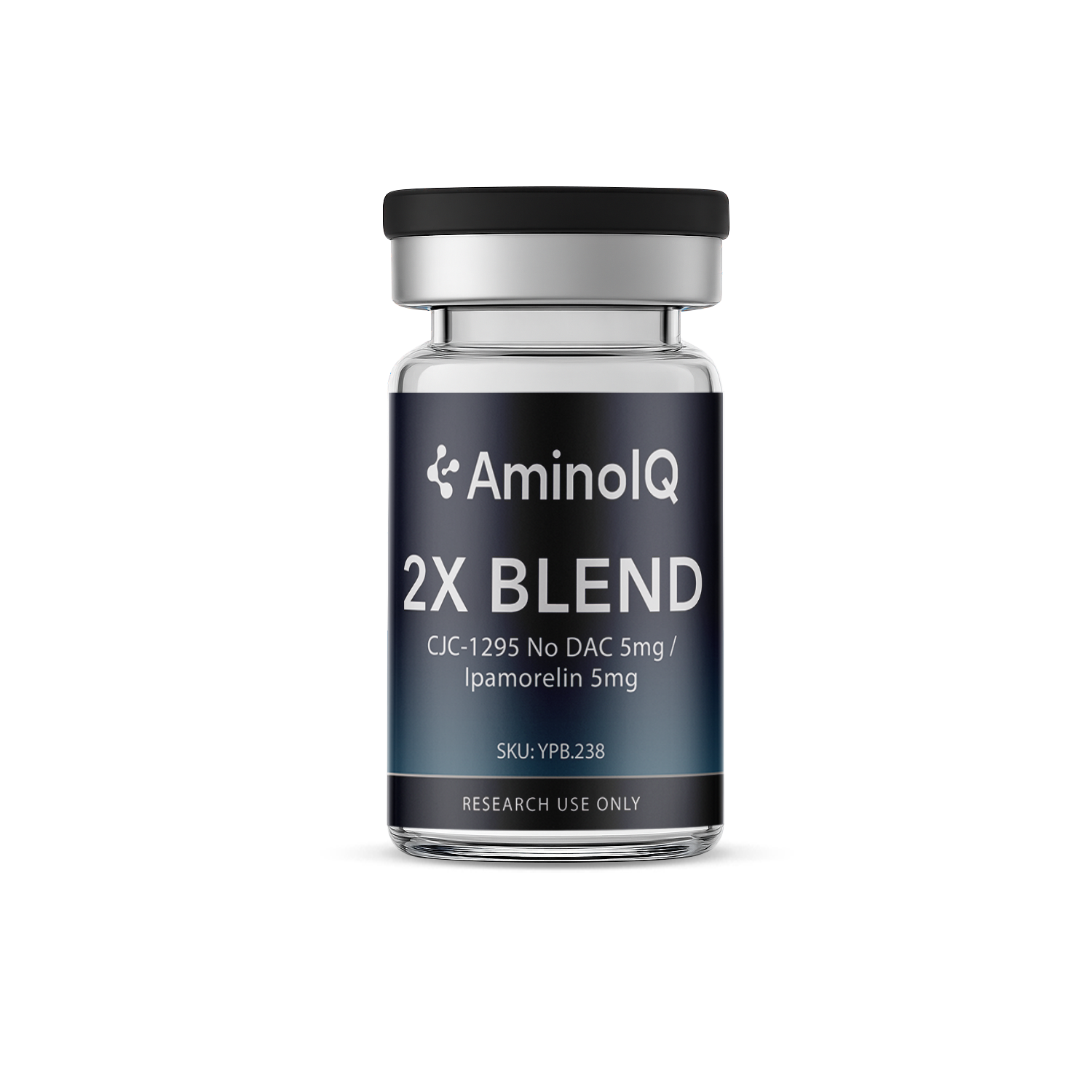
2X Blend CJC-1295 Without DAC (5mg) / Ipamorelin (5mg)

$90.00

Out of stock

SKU: YPB.238 Categories: ,

Additional information

Weight0.0625 lbs
Dosage

5mg

Storage Instructions

All products from Amino Supply are manufactured using a lyophilization (freeze-drying) process. This method is designed to maintain product integrity and allows vials to remain stable during shipping for approximately 3–4 months.

Once a vial is reconstituted with bacteriostatic water, it should be stored in the refrigerator to help maintain stability. Under these conditions, reconstituted material is generally considered stable for up to 30 days.

Lyophilization is a dehydration technique in which compounds are frozen and then exposed to low pressure. This causes the water in the vial to sublimate directly from solid to gas, leaving behind a stable, crystalline white structure. This powder can be kept at room temperature until reconstitution.

Upon receipt, products should be stored away from heat and light. For short-term use, refrigeration at approximately 4°C (39°F) is suitable. For long-term storage (several months to years), vials may be placed in a freezer at approximately -80°C (-112°F). Freezing is the preferred method for preserving product stability over extended periods.

⚠️ Important Notice:
These products are intended for research use only. Not for human consumption.

Research Use Only

These studies reference research-grade peptides for laboratory and scientific investigation only. Not for human consumption. Not intended to diagnose, treat, cure, or prevent any disease.

Published Scientific Research

Peer-reviewed laboratory research investigating growth hormone peptides from leading scientific databases

Laboratory Research
PubMed

Ghrelin as a Biomarker of "Immunometabolic Depression" and Its Connection with Dysbiosis.

Nutrients 2023

Ghrelin, a gastrointestinal peptide, is an endogenous ligand of growth hormone secretagogue receptor 1a (GHSR1a), which is mainly produced by X/A-like cells in the intestinal mucosa. Beyond its initial description as a growth hormone (GH) secretagogue stimulator of appetite, ghrelin has been revealed to have a wide range of physiological effects, for example, the modulation of inflammation; the improvement of cardiac performance; the modulation of stress, anxiety, taste sensation, and reward-seeking behavior; and the regulation of glucose metabolism and thermogenesis.

View Full Study
Molecular Analysis
PubMed

Binding Domain Characterization of Growth Hormone Secretagogue Receptor.

Journal of translational internal medicine 2022

BACKGROUND AND OBJECTIVES: Activation of ghrelin receptor growth hormone secretagogue receptor (GHS-R) by endogenous or synthetic ligands amplifies pulsatile release of growth hormone (GH) and enhances food intake, very relevant to development and growth. GHS-R is a G-protein coupled receptor that has great druggable potential.

View Full Study
Molecular Analysis
PubMed

Ghrelin and LEAP-2: Rivals in Energy Metabolism.

Trends in pharmacological sciences 2018

Liver-expressed antimicrobial peptide 2 (LEAP-2), the endogenous noncompetitive allosteric antagonist of the growth hormone secretagogue receptor 1a (GHSR1a), was recently identified as a key endocrine factor regulating systemic energy metabolism. This antagonist impairs the ability of ghrelin to activate GHSR1a and diminishes ghrelin-induced Ca release in vitro.

View Full Study
In Vitro Study
PubMed

Ghrelin function in insulin release and glucose metabolism.

Endocrine development 2013

Circulating ghrelin is produced predominantly in the stomach, and its receptor GH secretagogue receptor (GHS-R) is expressed in a variety of central and peripheral tissues. The signal transduction mechanisms of ghrelin receptor in islet β-cells are very unique, being distinct from those utilized for GH release.

View Full Study
Mechanism Study
PubMed

Ghrelin in the regulation of body weight and metabolism.

Frontiers in neuroendocrinology 2010

Ghrelin, a peptide hormone predominantly produced by the stomach, was isolated as the endogenous ligand for the growth hormone secretagogue receptor. Therapeutic intervention with ghrelin in catabolic situations may induce a combination of enhanced food intake, increased gastric emptying and nutrient storage, coupled with an increase in GH thereby linking nutrient partitioning with growth and repair processes.

View Full Study