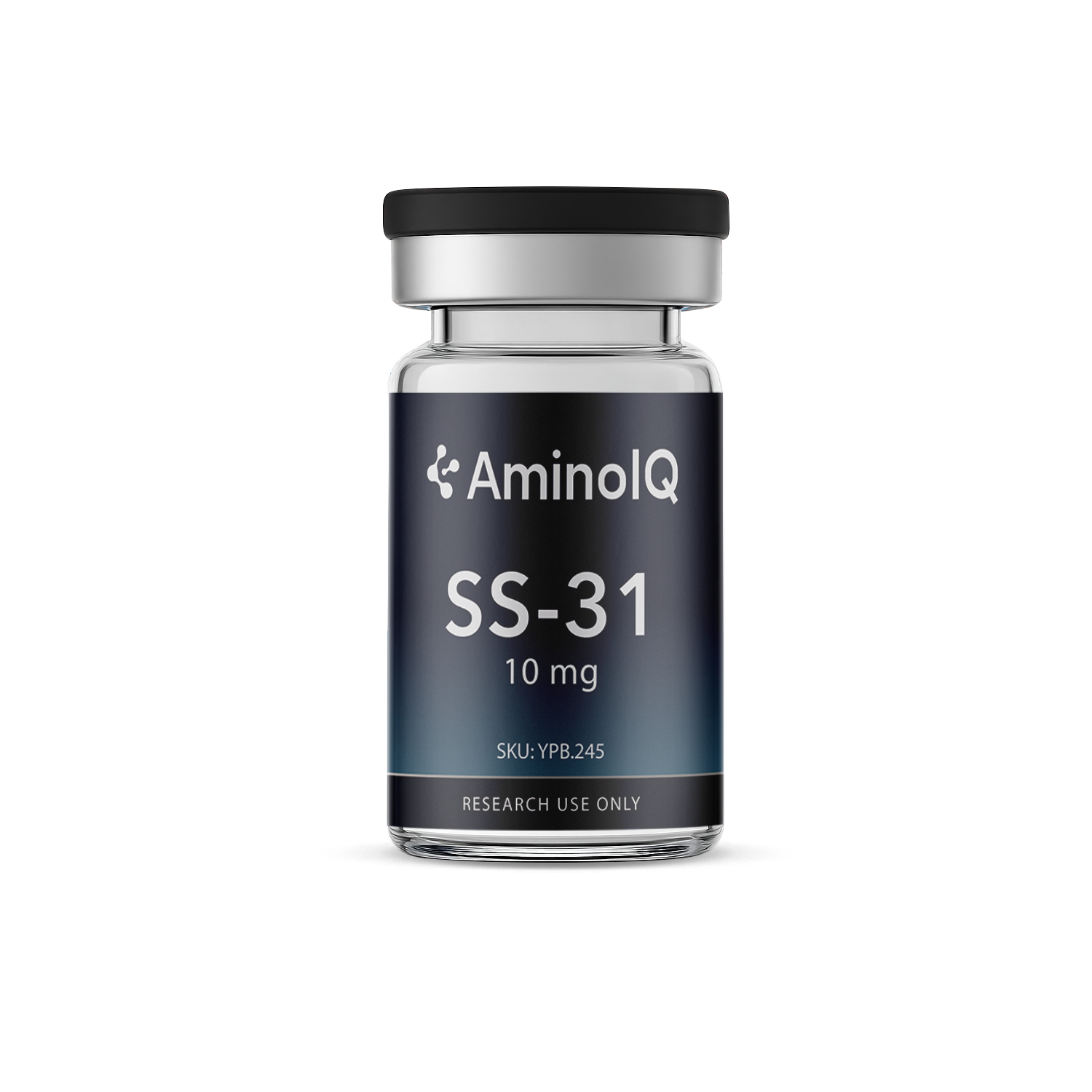
SS-31
Price range: $85.00 through $260.00
Description
A single-component research material supplied for controlled research environments. Suitable for studies involving mitochondrial-targeting peptide characterization and method development in model systems.
Composition
• SS-31
• Appearance: Lyophilized powder in a sealed research vial
Research Focus (non-clinical)
• Peptide identity and purity assessment via HPLC/LC-MS
• Assay development and calibration for quantitative analysis
• Chromatographic method optimization for impurity profiling and peak resolution
• Stability characterization of a lyophilized peptide under laboratory storage conditions
For qualified research professionals and institutional laboratories. Not for human use.
Documentation & Quality Assurance
Each lot is sourced through our verified global supply chain with emphasis on traceability and quality control. We work diligently to obtain and maintain third-party analytical reports (HPLC/LC-MS) and Certificates of Analysis for each batch, as part of our ongoing quality process. These documents are reviewed internally and displayed as they become available. Independent third-party testing is also performed on select lots to confirm identity, purity, and alignment with our internal specifications.
Important Notice
This product is intended for laboratory research use only. It is not intended for human or veterinary use, and must not be used for diagnostic, therapeutic, or clinical purposes.
This material is not a drug, medical device, or dietary supplement, and has not been evaluated by the U.S. Food and Drug Administration.
Quality & Manufacturing
All materials are sourced from carefully vetted domestic and international manufacturing partners who follow quality systems consistent with ISO and cGMP principles. Each supplier is reviewed for reliability, documentation integrity, and transparency in testing.
We require a verified purity of 99% or higher and perform independent third-party spot testing to confirm that select lots meet our internal standards for identity, purity, and composition. Where available, endotoxin testing results are included on Certificates of Analysis to verify laboratory purity; their inclusion is for research quality assessment only and does not imply suitability for human or veterinary use.
All research materials are sealed for integrity and packaged for stability during storage and transport from manufacturing through final delivery.
Additional information
| Weight | 0.05 lbs |
|---|---|
| Dosage | 10mg, 50mg |
Storage Instructions
All our research peptides are manufactured using a lyophilization (freeze-drying) process. This method is designed to maintain product integrity and allows vials to remain stable during shipping for approximately 3–4 months.
Once a vial is reconstituted with bacteriostatic water, it should be stored in the refrigerator to help maintain stability. Under these conditions, reconstituted material is generally considered stable for up to 30 days.
Lyophilization is a dehydration technique in which compounds are frozen and then exposed to low pressure. This causes the water in the vial to sublimate directly from solid to gas, leaving behind a stable, crystalline white structure. This powder can be kept at room temperature until reconstitution.
Upon receipt, products should be stored away from heat and light. For short-term use, refrigeration at approximately 4°C (39°F) is suitable. For long-term storage (several months to years), vials may be placed in a freezer at approximately -80°C (-112°F). Freezing is the preferred method for preserving product stability over extended periods.
⚠️ Important Notice: These products are intended for research use only. Not for human consumption.
Certificate of Analysis
COA pending — third-party verification in progress
Research Use Only
These studies reference research-grade peptides for laboratory and scientific investigation only. Not for human consumption. Not intended to diagnose, treat, cure, or prevent any disease.
Published Scientific Research
Peer-reviewed laboratory research investigating research peptides from leading scientific databases
Enhanced Parkin-mediated mitophagy mitigates adverse left ventricular remodelling after myocardial infarction: role of PR-364.
To reveal the mechanism of PR-364, a multi-omic strategy was deployed in combination with classical functional assays using in vivo MI and in vitro cardiomyocyte models. RESULTS: In vitro cell data indicated that Parkin activation by PR-364 increased mitophagy and mitochondrial biogenesis, enhanced adenosine triphosphate production via improved citric acid cycle, altered accumulation of calcium localization to the mitochondria, and initiated translational reprogramming with increased expression of mitochondrial translational proteins.
View Full StudyMitochondrial Cardiolipin-Targeted Tetrapeptide, SS-31, Exerts Neuroprotective Effects Within In Vitro and In Vivo Models of Spinal Cord Injury.
Emerging evidence suggests that CL alterations contribute to secondary SCI pathology, but their precise role and underlying mechanisms remain fully understudied. The results showed that SS-31 reduced rotenone- and glutamate-induced mitochondrial dysfunction and neuronal death in a dose-dependent manner in vitro.
View Full StudyComprehensive dry eye therapy: overcoming ocular surface barrier and combating inflammation, oxidation, and mitochondrial damage.
Currently, anti-inflammatory drugs have shown promising efficacy in treating DED; however, such drugs are associated with side effects. This calls for investigations to overcome these challenges associated with ocular drug administration.
View Full StudyNew insight for SS‑31 in treating diabetic cardiomyopathy: Activation of mitoGPX4 and alleviation of mitochondria‑dependent ferroptosis.
In addition, in vivo studies were conducted on diabeticC57BL/6J mice, which were induced to develop DCM over 4 weeks, followed by intraperitoneal injections with 2.5 mg/kg/day SS‑31 for a further 4 weeks. The results of the present study indicated that SS‑31 effectively alleviated these pathological changes and exhibited significant efficacy in ameliorating mitochondrial dysfunction, such as by promoting adenosine triphosphate generation, improving mitochondrial membrane potential and restoring the mitochondrial ultrastructure.
View Full StudySS-31 inhibits mtDNA-cGAS-STING signaling to improve POCD by activating mitophagy in aged mice.
In this study, we sought to explore whether SS-31 plays a neuroprotective role and the underlying mechanism. RESULTS: Our study revealed that SS-31 interacted with PHB2 to activate mitophagy and improve neural damage in surgically aged mice, which was attributed to the reduced cGAS-STING pathway and M1 microglial polarization by decreased release of mitochondrial DNA (mtDNA) but not nuclear DNA (nDNA).
View Full StudyPost-sepsis chronic muscle weakness can be prevented by pharmacological protection of mitochondria.
METHODS: Experimental polymicrobial abdominal sepsis was induced in 16-18 months old male and female mice using cecal slurry injection with subsequent antibiotic and fluid resuscitation. Following sepsis development in C57BL/6 mice, we evaluated the effect of the mitochondria-targeting synthetic tetrapeptide SS-31 in protecting mitochondria from sepsis-induced damage and preventing skeletal muscle weakness development.
View Full Study