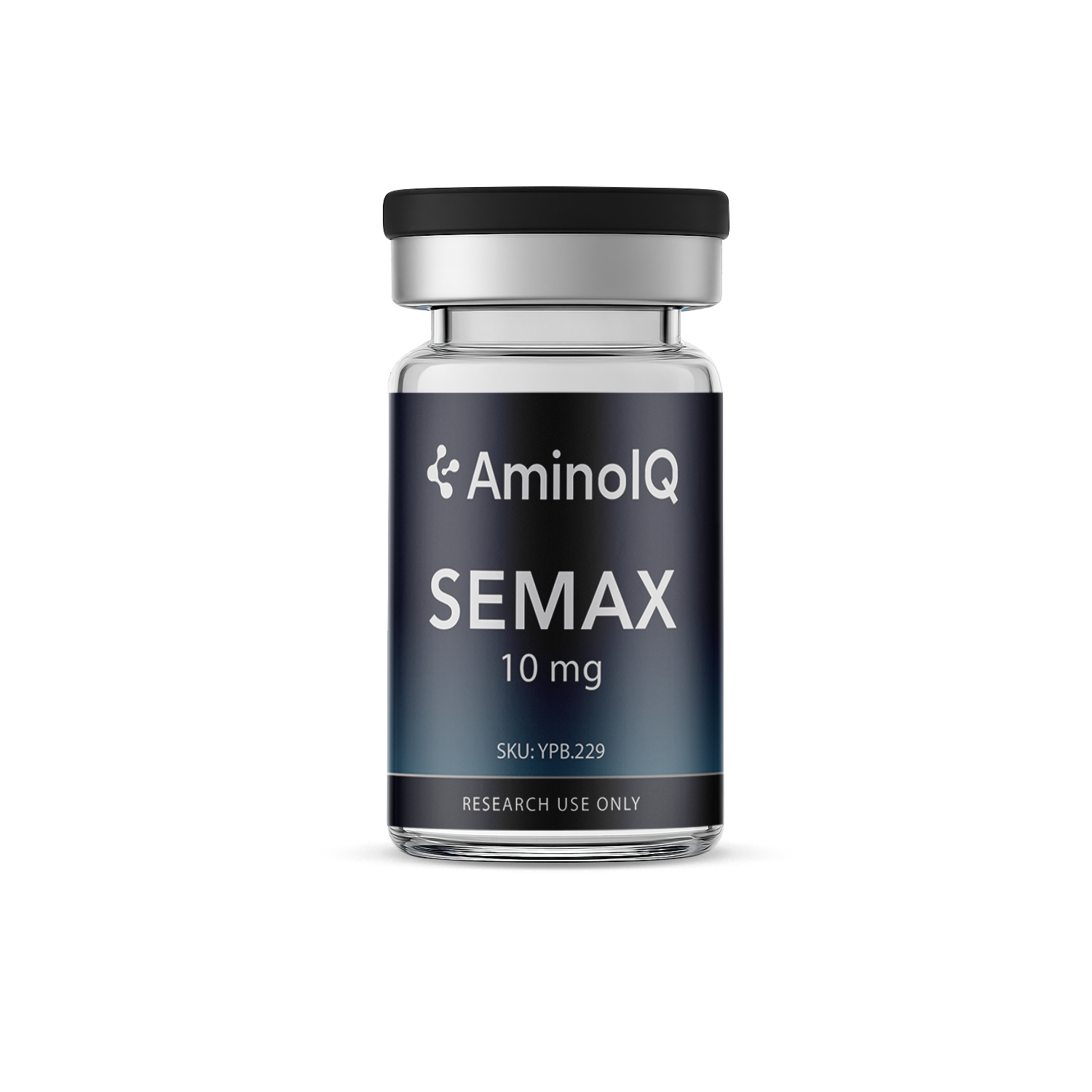
Semax (10mg)
$60.00
2 published certificates
Certificate information is temporarily unavailable.
Description
Description
A single-component research material supplied for controlled research environments. Suitable for studies involving peptide characterization and method development in model systems.
Composition
Semax: 10 mg
Appearance: lyophilized powder in a sealed research vial
Research Focus (non-clinical)
Peptide identity and purity assessment via HPLC/LC-MS
Assay development and calibration for quantitative analysis
Chromatographic method optimization for impurity profiling and peak resolution
Stability characterization of a lyophilized peptide under laboratory storage conditions
Documentation
COA pending — third-party verification in progress
Important Notice
For research use only
Not for human consumption
Not intended to diagnose, treat, cure, or prevent any disease
Quality & Manufacturing
COA pending — third-party verification in progress
Lyophilized for transit stability; batch traceable
Tamper-evident seal; lot & test date on each vial
Additional information
| Weight | 0.0625 lbs |
|---|
Storage Instructions
All products from Amino Supply are manufactured using a lyophilization (freeze-drying) process. This method is designed to maintain product integrity and allows vials to remain stable during shipping for approximately 3–4 months.
Once a vial is reconstituted with bacteriostatic water, it should be stored in the refrigerator to help maintain stability. Under these conditions, reconstituted material is generally considered stable for up to 30 days.
Lyophilization is a dehydration technique in which compounds are frozen and then exposed to low pressure. This causes the water in the vial to sublimate directly from solid to gas, leaving behind a stable, crystalline white structure. This powder can be kept at room temperature until reconstitution.
Upon receipt, products should be stored away from heat and light. For short-term use, refrigeration at approximately 4°C (39°F) is suitable. For long-term storage (several months to years), vials may be placed in a freezer at approximately -80°C (-112°F). Freezing is the preferred method for preserving product stability over extended periods.
⚠️ Important Notice:
These products are intended for research use only. Not for human consumption.