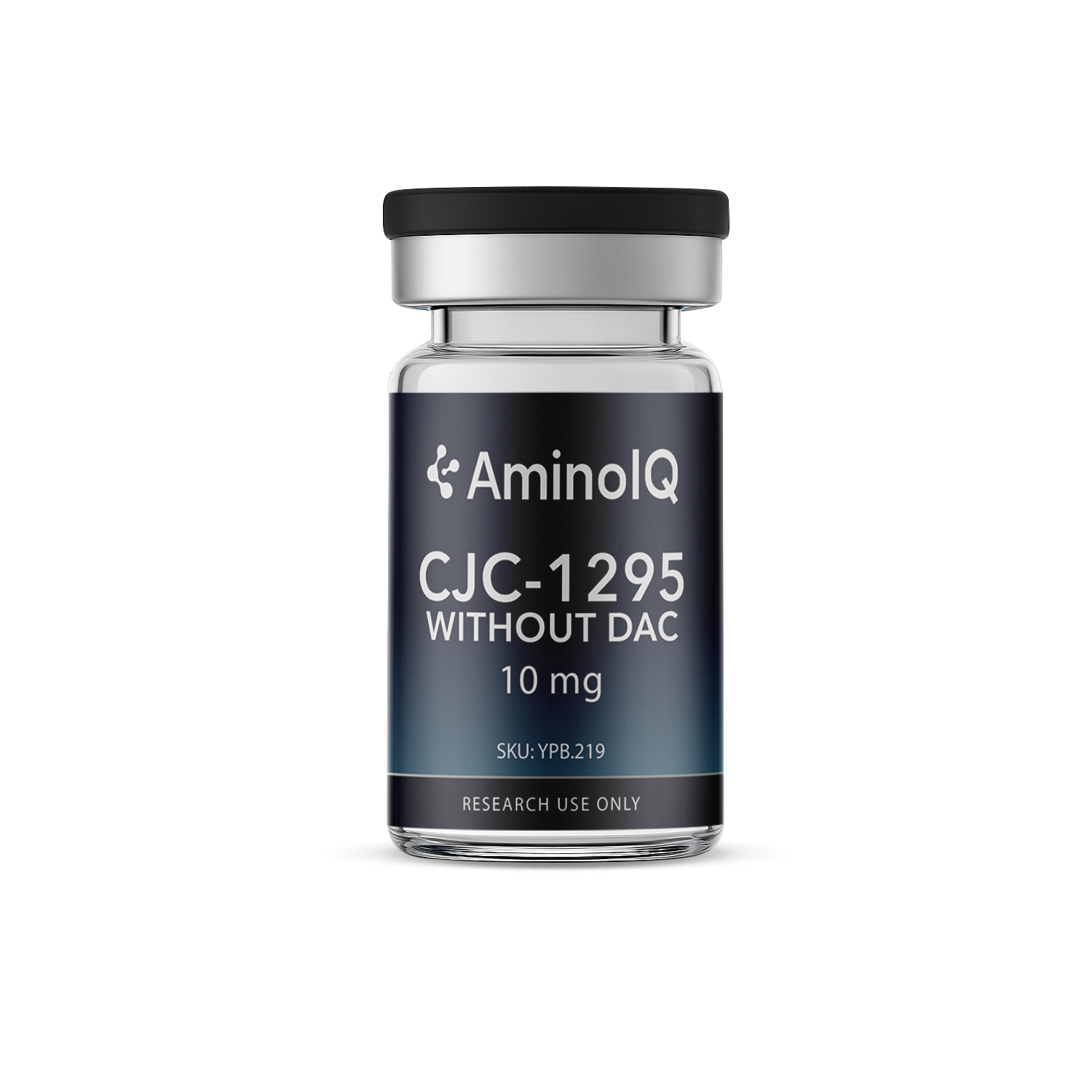
CJC-1295 Without DAC (10mg)

$80.00

SKU: YPB.219 Category:

Description

A single-component research material supplied for controlled research environments. Suitable for studies exploring GHRH-receptor pathway characterization in model systems.


Composition

• CJC-1295 (Without DAC)
Appearance: Lyophilized powder in a sealed research vial


Research Focus (non-clinical)

• Peptide identity and purity assessment via HPLC/LC-MS
• Assay development and calibration for quantitative analysis of GHRH-analog activity in in-vitro or ex-vivo models
• Chromatographic method optimization for impurity profiling and peak resolution
• Stability characterization of a lyophilized peptide under laboratory storage conditions

For qualified research professionals and institutional laboratories. Not for human use.


Documentation & Quality Assurance

Each lot is sourced through our verified global supply chain with emphasis on traceability and quality control. We work diligently to obtain and maintain third-party analytical reports (HPLC/LC-MS) and Certificates of Analysis for each batch, as part of our ongoing quality process. These documents are reviewed internally and displayed as they become available. Independent third-party testing is also performed on select lots to confirm identity, purity, and alignment with our internal specifications.


Important Notice

This product is intended for laboratory research use only. It is not intended for human or veterinary use, and must not be used for diagnostic, therapeutic, or clinical purposes.
This material is not a drug, medical device, or dietary supplement, and has not been evaluated by the U.S. Food and Drug Administration.


Quality & Manufacturing

All materials are sourced from carefully vetted domestic and international manufacturing partners who follow quality systems consistent with ISO and cGMP principles. Each supplier is reviewed for reliability, documentation integrity, and transparency in testing.

We require a verified purity of 99% or higher and perform independent third-party spot testing to confirm that select lots meet our internal standards for identity, purity, and composition. Where available, endotoxin testing results are included on Certificates of Analysis to verify laboratory purity; their inclusion is for research quality assessment only and does not imply suitability for human or veterinary use.

All research materials are sealed for integrity and packaged for stability during storage and transport from manufacturing through final delivery.

Additional information

Weight 0.05 lbs

Storage Instructions

All our research peptides are manufactured using a lyophilization (freeze-drying) process. This method is designed to maintain product integrity and allows vials to remain stable during shipping for approximately 3–4 months.

Once a vial is reconstituted with bacteriostatic water, it should be stored in the refrigerator to help maintain stability. Under these conditions, reconstituted material is generally considered stable for up to 30 days.

Lyophilization is a dehydration technique in which compounds are frozen and then exposed to low pressure. This causes the water in the vial to sublimate directly from solid to gas, leaving behind a stable, crystalline white structure. This powder can be kept at room temperature until reconstitution.

Upon receipt, products should be stored away from heat and light. For short-term use, refrigeration at approximately 4°C (39°F) is suitable. For long-term storage (several months to years), vials may be placed in a freezer at approximately -80°C (-112°F). Freezing is the preferred method for preserving product stability over extended periods.

⚠️ Important Notice: These products are intended for research use only. Not for human consumption.
Certificate of Analysis

COA pending — third-party verification in progress

Research Use Only

These studies reference research-grade peptides for laboratory and scientific investigation only. Not for human consumption. Not intended to diagnose, treat, cure, or prevent any disease.

Published Scientific Research

Peer-reviewed laboratory research investigating growth hormone peptides from leading scientific databases

Molecular Analysis
PubMed

Growth hormone secretion: molecular and cellular mechanisms and in vivo approaches.

Experimental biology and medicine (Maywood, N.J.) 2004

Secretion of GH is stimulated by GH-releasing hormone (GHRH) and ghrelin (acting via the GH secretagogue [GHS] receptor [GHSR]), and inhibited by somatostatin (SRIF). The cellular mechanism by which the releasing hormones affect GH secretion from the somatotrope requires specific signal transduction systems (cAMP and/or calcium influx and/or mobilization of intracellular calcium) and/ or tyrosine kinase(s) and/or nitric oxide (NO)/cGMP.

View Full Study
In Vitro Study
PubMed

Ghrelin: from a GH-secretagogue to the regulation of food intake, sleep and anxiety.

Pediatric endocrinology reviews : PER 2004

Grhelin is an endogenous ligand for the growth hormone secretagogue receptor from the stomach. Ghrelin has other significant actions, including control of acid secretion, influences on sleep and on the regulation of anxiety.

View Full Study
Laboratory Research
PubMed

Endocrine and non-endocrine actions of ghrelin.

Hormone research 2003

Ghrelin displays strong growth hormone (GH)-releasing action mediated by the activation of the so-called GH secretagogue (GHS) receptor (GHS-R) type 1a. Apart from the potent GH-releasing action, ghrelin has other actions including stimulation of lactotroph and corticotroph function, influence on the pituitary gonadal axis, stimulation of appetite, control of energy balance, influence on sleep and behavior, control of gastric motility and acid secretion, influence on exocrine and endocrine pancreatic function as well as on glucose metabolism, cardiovascular actions and modulation of proliferation of neoplastic cells, as well as of the immune system.

View Full Study
Molecular Analysis
PubMed

Ghrelin -- a new endogenous growth hormone secretagogue.

Physiological research 2002

Ghrelin is a new endogenous peptide, discovered in 1999 by Kojima et al., as the result of a search for an endogenous ligand for an orphan receptor of known structure and function. Its discovery is related to the development of a new hypothesis regarding the regulation of growth hormone secretion.

View Full Study
In Vitro Study
PubMed

In vivo and in vitro effects of ghrelin/motilin-related peptide on growth hormone secretion in the rat.

Neuroendocrinology 2001

Ghrelin (Ghr), a 28 amino acid gastric peptide with an n-octanoylation on Ser 3, has recently been identified as an endogenous ligand of the growth hormone secretagogue (GHS) receptor. Activation of somatostatin (SRIH) release by ether stress did not blunt the GH response to rGhr28.

View Full Study
Molecular Analysis
PubMed

Biologic activities of growth hormone secretagogues in humans.

Endocrine 2001

GHSs release GH via actions on specific receptors (GHS-R) at the pituitary and, mainly, at the hypothalamic levels. Estrogens play a major role in enhancing the GH response to GHSs at puberty, which GHRH hypoactivity, somatostatinergic hyperactivity and impaired activity of the putative GHS-like ligand and receptors probably explain the reduced GH-releasing effect of GHSs in aging.

View Full Study