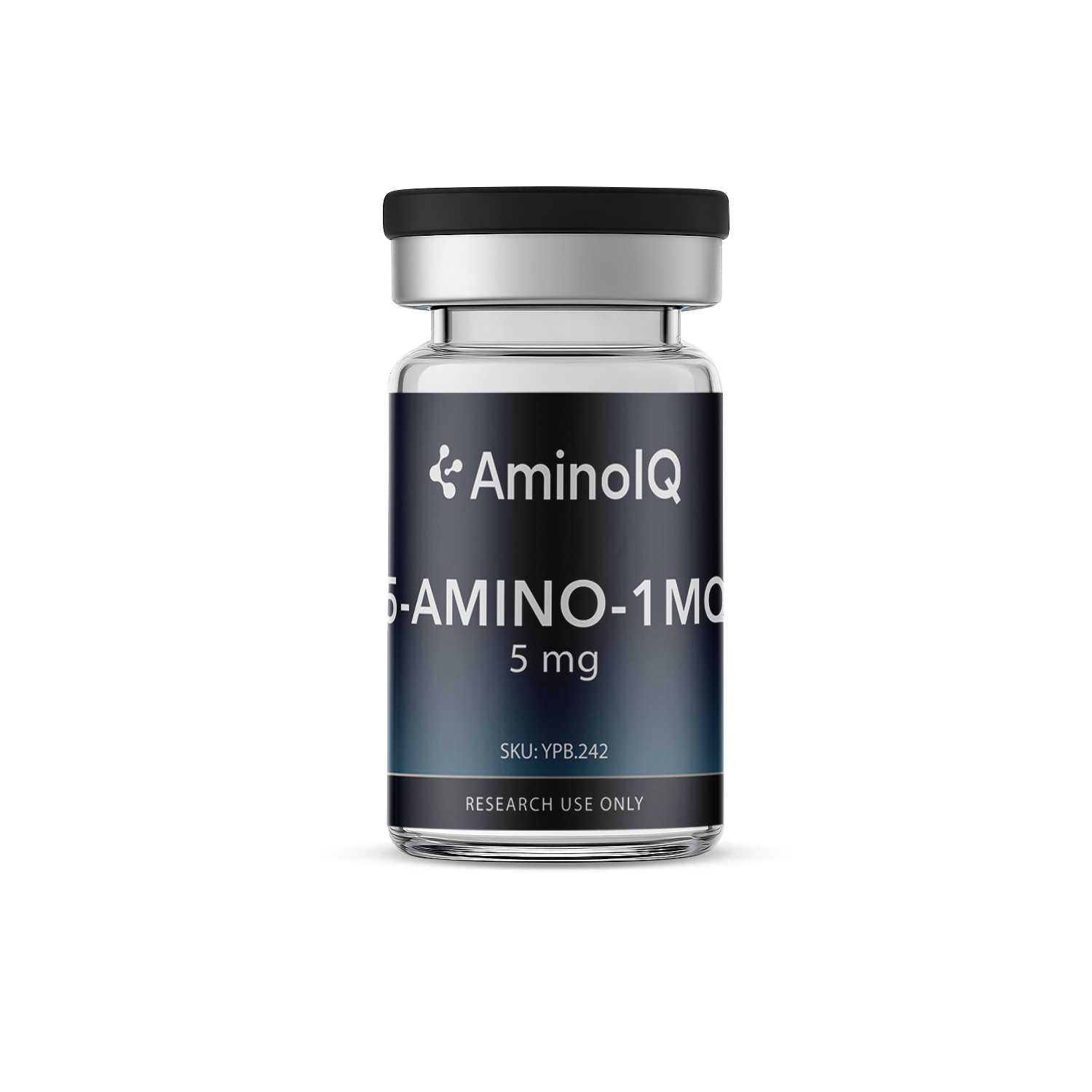
5-Amino-1mq

Price range: $50.00 through $140.00

SKU: YPB.242 Categories: ,

Additional information

Weight 0.05 lbs
Dosage

5mg, 50mg

Research Use Only

These studies reference research-grade peptides for laboratory and scientific investigation only. Not for human consumption. Not intended to diagnose, treat, cure, or prevent any disease.

Published Scientific Research

Peer-reviewed laboratory research investigating research peptides from leading scientific databases

Molecular Analysis
PubMed

Recent advances in peptide macrocyclization strategies.

Chemical Society reviews 2024

Recently, owing to their special spatial structures, peptide-based macrocycles have shown tremendous promise and aroused great interest in multidisciplinary research ranging from potent antibiotics against resistant strains to functional biomaterials with novel properties. Besides traditional monocyclic peptides, many fascinating polycyclic and remarkable higher-order cyclic, spherical and cylindric peptidic systems have come into the limelight owing to breakthroughs in various chemical (, nativ

View Full Study
Molecular Analysis
PubMed

Nanoassemblies designed for efficient nuclear targeting.

Advanced drug delivery reviews 2024

One of the key aspects of coping efficiently with complex pathological conditions is delivering the desired therapeutic compounds with precision in both space and time. Therefore, the focus on nuclear-targeted delivery systems has emerged as a promising strategy with high potential, particularly in gene therapy and cancer treatment. Here, we explore the design of supramolecular nanoassemblies as vehicles to deliver specific compounds to the nucleus, with the special focus on polymer and peptide-

View Full Study
Molecular Analysis
PubMed

Tat-NTS peptide protects neurons against cerebral ischemia-reperfusion injury via ANXA1 SUMOylation in microglia.

Theranostics 2023

Many studies have emphasized a well-established function of Annexin-A1 (ANXA1) in the immune system, including the regulation of microglial activation. We discovered the underlying mechanism that Tat-NTS peptide targets microglial ANXA1 to protect against ischemic brain injury.

View Full Study
Molecular Analysis
PubMed

Peptide-based covalent inhibitors of protein-protein interactions.

Journal of peptide science : an official publication of the European Peptide Society 2023

Protein-protein interactions (PPI) are involved in all cellular processes and many represent attractive therapeutic targets. However, the frequently rather flat and large interaction areas render the identification of small molecular PPI inhibitors very challenging. As an alternative, peptide interaction motifs derived from a PPI interface can serve as starting points for the development of inhibitors. However, certain proteins remain challenging targets when applying inhibitors with a competiti

View Full Study
Laboratory Research
PubMed

Recent Advances in Urinary Peptide and Proteomic Biomarkers in Chronic Kidney Disease: A Systematic Review.

International journal of molecular sciences 2023

Biomarker development, improvement, and clinical implementation in the context of kidney disease have been a central focus of biomedical research for decades. To this point, only serum creatinine and urinary albumin excretion are well-accepted biomarkers in kidney disease. With their known blind spot in the early stages of kidney impairment and their diagnostic limitations, there is a need for better and more specific biomarkers. With the rise in large-scale analyses of the thousands of peptides

View Full Study
Molecular Analysis
PubMed

Peptides in BioNMR Research.

Chimia 2021

Heteronuclear NMR in combination with isotope labelling is used to study folding of polypeptides induced by metals in the case of metallothioneins, binding of the peptidic allosteric modulator ρ-TIA to the human G-protein coupled α adrenergic receptor, the development of therapeutic drugs that interfere with the biosynthesis of the outer membrane of Gram-negative bacteria, and a system in which protein assembly is induced upon peptide addition.

View Full Study